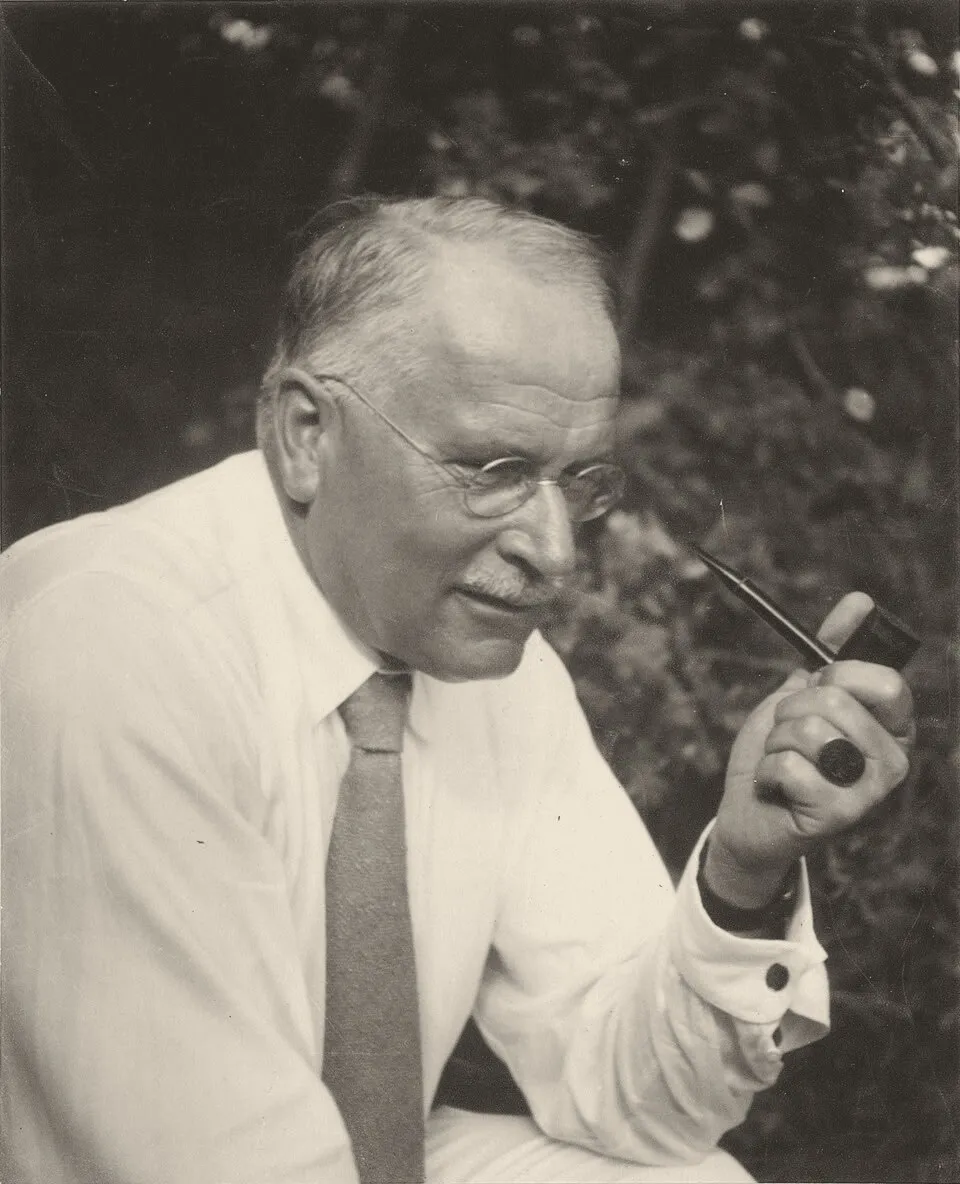
What did Carl Jung really think about God, religion, and the inner life?
In these thought-provoking lectures, Mark Vernon brings Jung’s most powerful ideas to life—exploring the unconscious, symbols, synchronicity, and spiritual experience in a way that’s accessible, challenging, and deeply relevant to modern seekers.
Carl Jung was born in 1875, just over 150 years ago. But what lies at the heart of his psychology and how compatible is it with theistic convictions?
Jung endured a substantial crisis in the earlier part of his life, known now in his so-called “Red Book”, in which he describes encounters with various entities and the zeitgeist. He strove to bring the insights he gained to the wider world, in various phases of work, including personality types and alchemical concepts. He also engaged with other thinkers such as Nietzsche and Darwin and, of course, Freud.
In other words, Jung wanted to make a difference and, by any measure, he has. But his ideas about religion, and Christianity in particular, are contested. Towards the end of his life, he described not believing in God but knowing of God’s existence. He also disagreed with the classical conception of God held in traditions including the Christian. So what can be made of his work now?
Assuming no prior knowledge, the lectures return to basics, which is, in fact, the best way to make an assessment of Jung’s insights.
The lectures
Lectures to be released shortly.
Lecture 1: A Call From The Unconscious
An outline of Jung’s life and how he came to see his vocation.
Lecture 2: After The Split With Freud
Jung’s own analytical psychology in outline.
Lecture 3: The Spiritual Problem of Today
How Jung understood psychotherapy to be a response to a modern crisis.
Lecture 4: The Failure of Religion
Jung had a sharp critique of the failures of Christianity.
Lecture 5: The Fabric of Reality
Phenomena like synchronicities suggested a complete metaphysic to Jung.
Lecture 6: Jung and God
An exploration of Jung’s theology: its genius and constraints.